The Citizen Developer Enablement Playbook for 2026
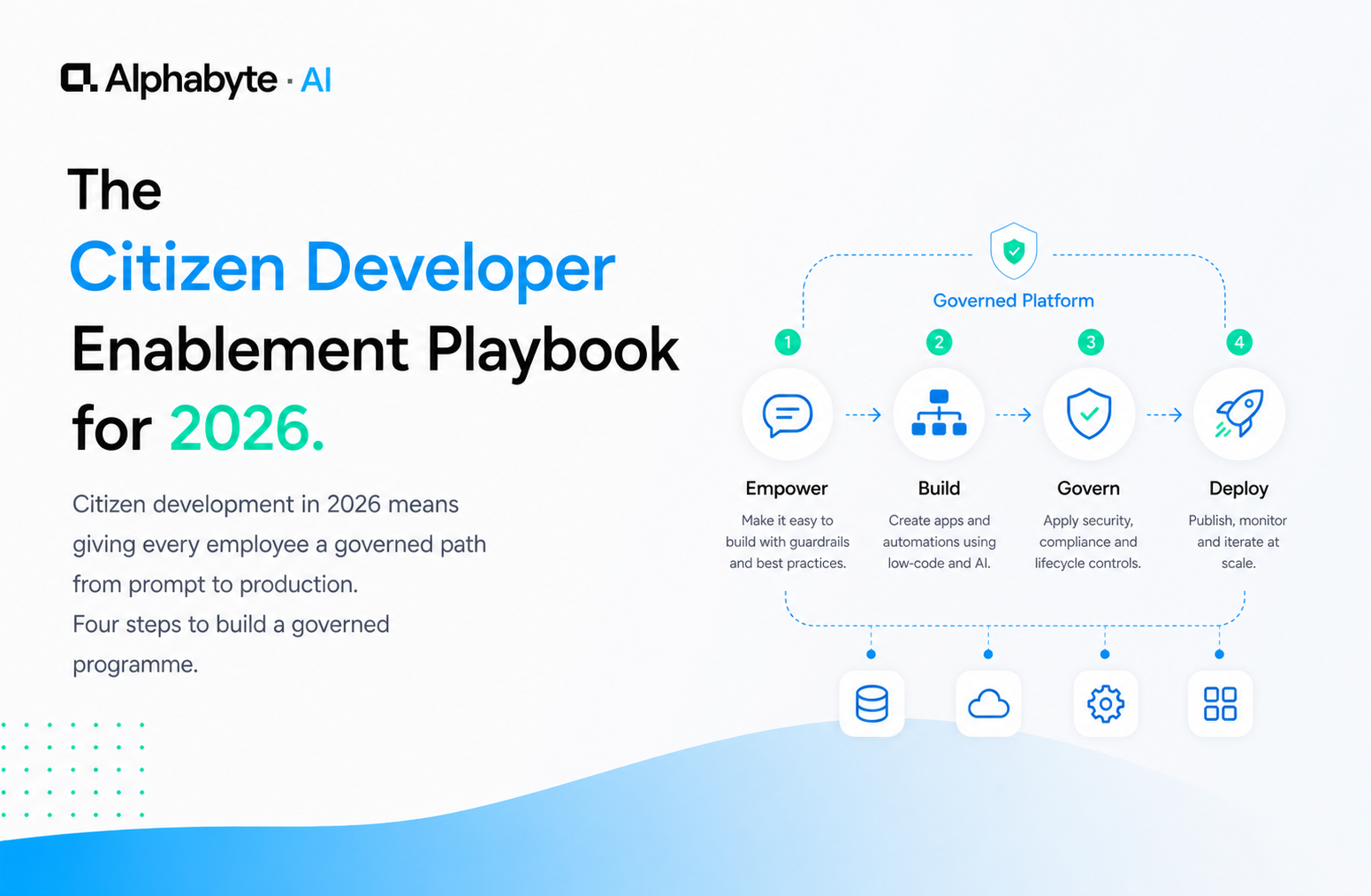
Citizen development in 2026 means giving every employee a governed path from prompt to production. Four steps to build a governed programme.

Adam Nameh
March 31, 2026 · Updated May 6, 2026 · 9 min read
Your employees already know how to do their work. The reason they cannot build tools around that knowledge is that the interface has always required them to think like developers. That constraint is gone.
Citizen developer enablement in 2026 is not about low-code platforms with drag-and-drop builders. It is about giving every employee a governed path from describing their work in plain English to running a production tool against live data. The architecture that makes this possible combines Claude as the reasoning layer, MCP servers for data connectivity, and an SDLC plugin for governance.
Organisations that deploy this model correctly see their first working tools within weeks, not quarters. The hard part is not the technology; it is the decision to start.
Why now
The timing matters because two things converged in the past year. First, large language models became reliable enough to follow multi-step business logic without constant correction. Anthropic's documentation on extended thinking details the reasoning improvements that make this practical.
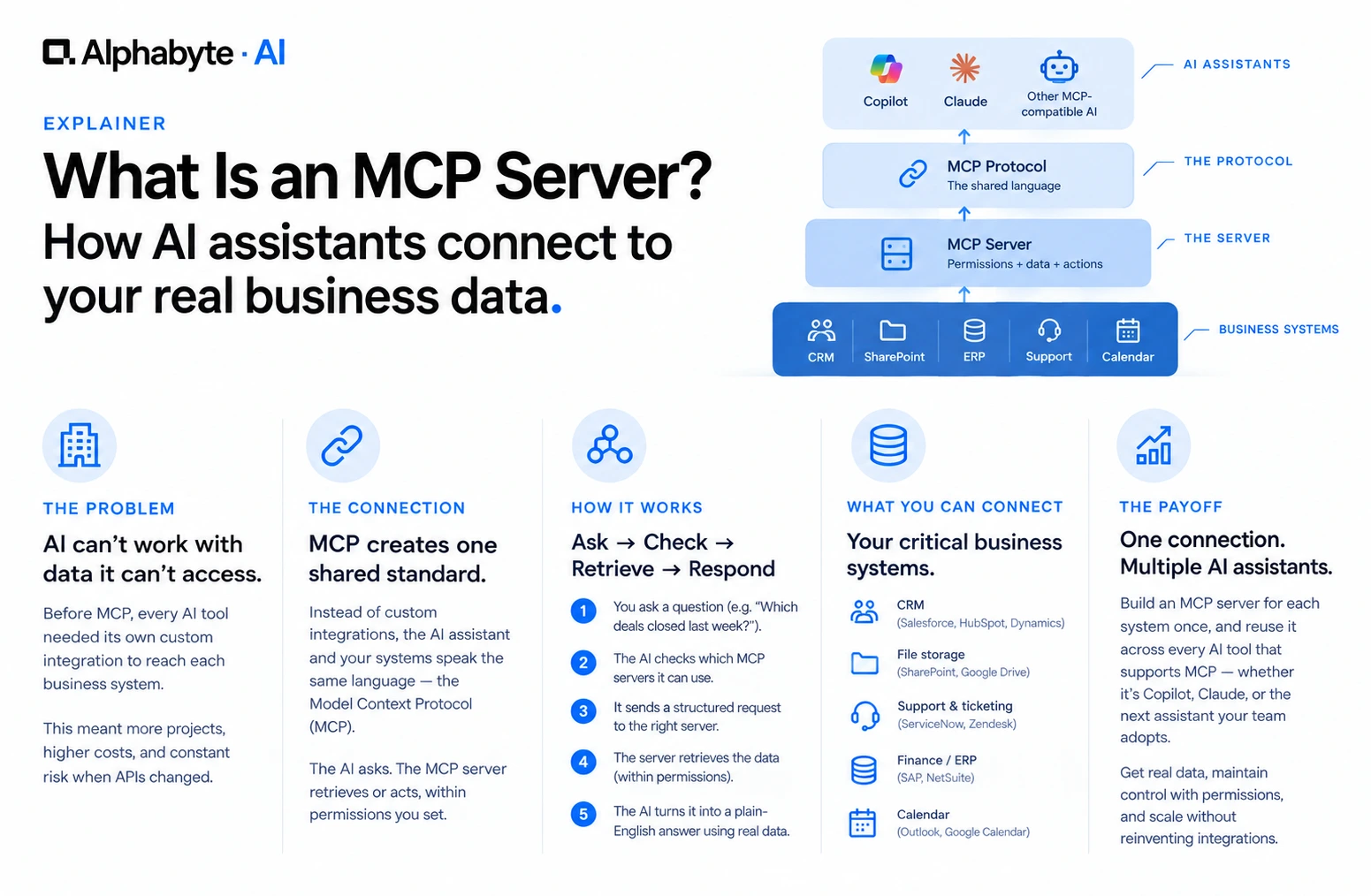
Second, the Model Context Protocol (MCP) created a standard way to connect AI to enterprise systems, which means citizen-built tools can work against real CRM, ERP, and document data instead of sample datasets.
McKinsey's 2024 "The state of AI" survey found that organisations now report the highest AI adoption rates ever recorded, with a growing share of that adoption driven by non-technical users. The citizen developer wave is not theoretical. It is happening, and organisations without a governed programme are watching it happen on personal accounts they cannot see.
The low-code era hit a ceiling that Claude removes
The original citizen developer model promised that business users could build their own applications. The reality was narrower. Platforms like Power Apps, Mendix, and OutSystems let non-technical people build forms, wire up simple logic, and connect to a limited set of data sources.
It worked for basic CRUD operations. Need a request form that writes to a SharePoint list? Done. Need an approval workflow with three steps? Covered.
But the moment a citizen developer needed to touch real business logic (pulling data from a legacy ERP, writing conditional rules against complex datasets, building something beyond drag-and-drop), they were back in IT's queue.
The model had a ceiling, and most organisations hit it quickly. Citizen development became a label for form builders and basic automation. The hard work stayed where it always was. The operations manager who needed to pull data from three systems, apply conditional logic, and produce a formatted output was still filing a ticket with IT and waiting weeks for a response.
In our engagements, we have seen this ceiling firsthand. When we deployed citizen developer enablement with a custom SDLC plugin for a client, the existing low-code tools covered roughly 20 percent of the workflows the team wanted to automate. The remaining 80 percent required either developer involvement or a fundamentally different interface. Claude provided that interface.
How Claude changes the citizen developer interface
The constraint was never the people. It was the interface. Business users understood their work deeply. They just could not express that understanding in a way that produced working software.
Claude changes the interface. An operations manager who can describe her weekly compliance review in plain English can now build a working tool that performs that review against live data.
Not a form. Not a simple automation. A tool that reads documents, applies rules, and produces output she would trust.
The architecture has three parts. Claude provides the reasoning and generation layer. MCP servers connect Claude to your actual systems: your CRM, your ERP, your file storage. And a governed environment with an SDLC plugin ensures that everything built is auditable, versioned, and replicable.
We have written about how to build custom MCP servers for organisations that need connections to proprietary systems.
The difference from the low-code era is not incremental. When you give people an interface that matches how they think (natural language, against real data), the set of problems they can solve expands dramatically. Gartner's Hype Cycle for AI identifies this natural-language interface shift as a key enabler for enterprise AI adoption beyond pilot stage.
Four steps to a governed citizen developer programme
Citizen developer programmes fail when they start with technology and hope adoption follows. They succeed when they start with the people who are already motivated and install infrastructure around them.
Step one: find the people already using AI. Every mid-market organisation has them. Someone in operations who has been pasting data into Claude. Someone in finance who built a prompt template for monthly reporting. Find them. Learn what they built.
That is your first proof point and your best signal for where to invest. Our shadow AI governance post covers how to surface this existing usage.
Step two: install governance and guardrails. Before you scale anything, the governed environment needs to be in place. The SDLC plugin enforces review. Permissions are scoped. Sensitive data is classified. Every project has a defined boundary.
This is not bureaucracy. It is the infrastructure that lets you say yes to more people building more things. We cover the governance framework in detail in our AI governance post.
Step three: connect to real data via MCP. The value of a citizen-built tool is directly proportional to the data it can access. Pre-wired MCP connections to your operational systems (your CRM, your ERP, your document stores) mean the first tool someone builds works against real data, not a sample dataset. Our custom AI agents page explains how these connections work in practice.
Step four: create a graduation path. A personal tool that proves useful becomes a team tool. A team tool that proves reliable graduates to a production asset with monitoring and support. This path needs to be explicit, documented, and supported by the Citizen Development infrastructure you have deployed.
Without the graduation path, you get a collection of personal scripts that break when their creator goes on holiday. With it, you get an organisational capability that compounds. Each graduated tool becomes part of the institutional knowledge base, documented and maintained by the team rather than dependent on one person's memory.
What the first 30 days look like
We have run this playbook enough times to know what the timeline looks like when you commit to it.
What the first 30 days look like
Week 1
We talk to the people doing the actual work. We find out what they have already built and what is worth automating.
Week 2
The governed environment is configured. SDLC plugin built. Data connectivity through MCP. Guardrails in place.
Day 30
Your team is building. Against real data. Inside a governed environment. With a graduation path to production.
The speed matters. Not because fast is better than careful, but because the feedback loop between building and learning is the mechanism that makes the programme work. Every week your team spends planning instead of building is a week without the data that tells you what actually works. The sooner your team is building real things in a governed environment, the sooner you know which workflows matter and which do not.
In our engagements, we have seen this timeline hold consistently. The compliance intelligence agent we built for a construction firm started with a single domain expert describing regulatory compliance rules in plain English.
Within two weeks, the governed environment was deployed, MCP connections to the code library were configured, and the team was building against real data. By day 30, the tool was handling compliance lookups that previously required hours of manual cross-referencing.
Mid-market organisations have the right conditions for this
Enterprise organisations have the budget for citizen development platforms. They also have the procurement cycles, committee structures, and integration requirements that turn a two-week deployment into an eight-month programme.
Mid-market is different. You have enough operational complexity to benefit: real workflows, real pain points, real data. You also have the organisational agility to move from decision to deployment in weeks, not quarters.
Microsoft's Work Trend Index reports that mid-market organisations consistently adopt AI tools faster than enterprise counterparts, precisely because shorter decision chains allow faster iteration. Our work with a housing services organisation confirmed this pattern. The team went from initial assessment to governed deployment faster than any enterprise engagement we have seen.
That speed is not available at enterprise scale. And at small-business scale, the operational complexity rarely justifies the investment. Mid-market is the zone where the economics, the organisational structure, and the problem set all align. You have enough pain points to make it worth doing and enough agility to start doing it this month.
The playbook is not complicated. Find the people. Install the governance. Connect the data. Build the graduation path.
If you are ready to start, our Citizen Development service deploys the full governed environment in the first sprint.
Frequently Asked Questions
What is citizen developer enablement in 2026?
Citizen developer enablement means giving business users a governed path to build working tools using natural language and AI, rather than relying solely on low-code drag-and-drop platforms. In 2026, this typically involves Claude as the reasoning layer, MCP servers for data connectivity, and an SDLC plugin for governance and version control.
How is citizen development with Claude different from low-code platforms?
Low-code platforms like Power Apps handle basic forms and simple automations but stop at anything requiring real business logic or complex data access. Claude lets business users describe their work in plain English and produce tools that read documents, apply rules, and work against live enterprise data, with no artificial ceiling on complexity.
What governance is needed for citizen-built AI tools?
Every citizen-built tool should exist inside a governed environment with an SDLC plugin that enforces review and versioning, scoped permissions, classified sensitive data, and a defined graduation path from personal tool to team tool to production asset.
How long does it take to set up a citizen developer programme?
With committed leadership, the governed environment can be configured in two weeks. By day 30, your team is building against real data with guardrails in place. The first production-grade workflow typically emerges within the first monthly cycle.
Why is mid-market the best fit for citizen development?
Mid-market organisations have enough operational complexity (real workflows, real data, real pain points) to benefit, and enough organisational agility to move from decision to deployment in weeks rather than the months-long procurement cycles typical of enterprise.
Adam Nameh
Co-Founder, AI Practice. Adam Nameh is the Co-Founder of Alphabyte Solutions Inc., a Toronto-based data and AI consulting firm that has helped over 100 clients across North America turn complex data environments into actionable business intelligence. With a decade of hands-on experience in data architecture and platform design, Adam works directly with leadership teams to deliver practical AI and data solutions that drive real business outcomes.
View full profile →More from the blog
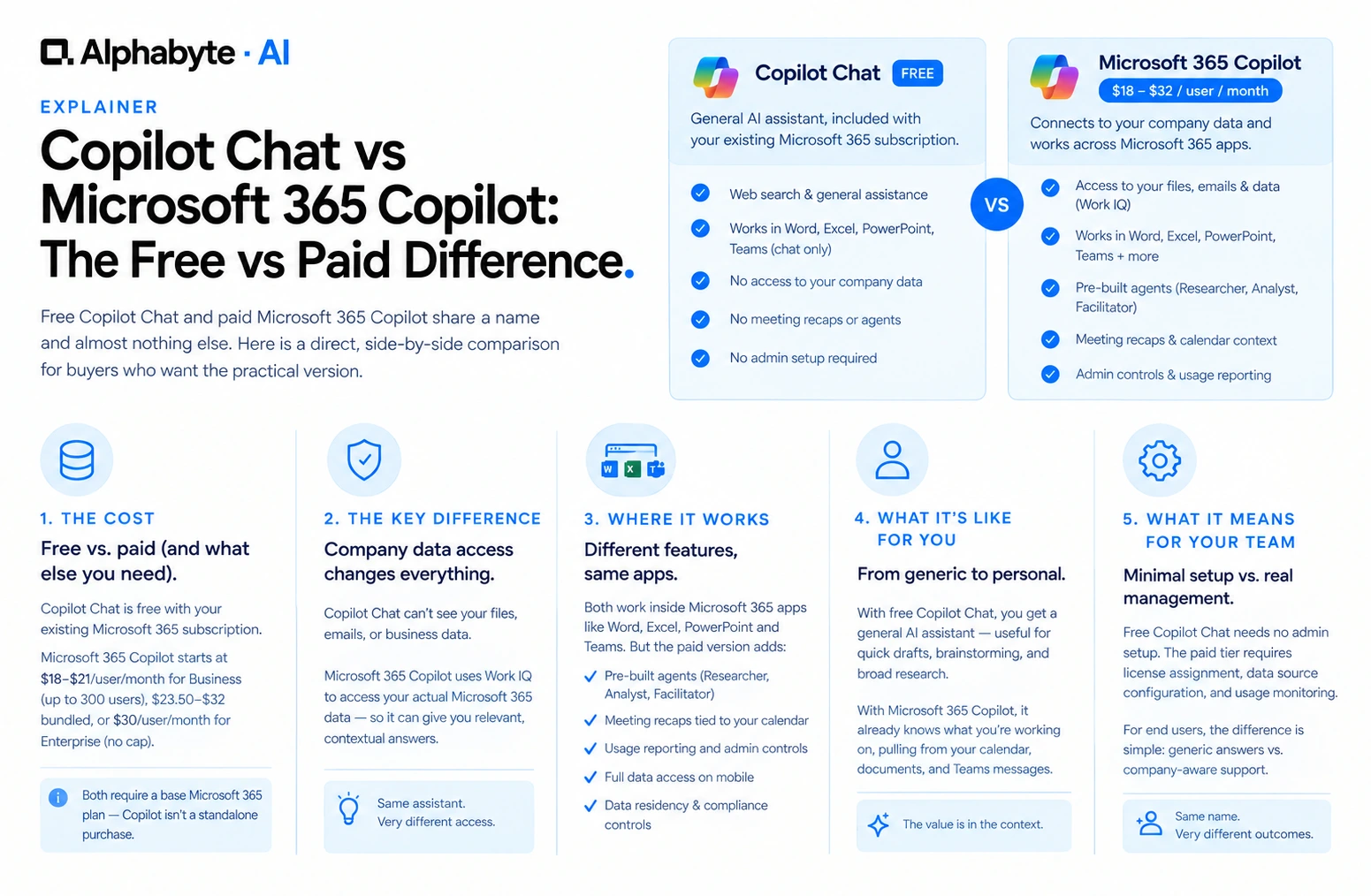
Copilot Chat vs Microsoft 365 Copilot: The Free vs Paid Difference
Free Copilot Chat and paid Microsoft 365 Copilot share a name and almost nothing else. Here is a direct, side-by-side comparison for buyers who want the practical version.
Read more →
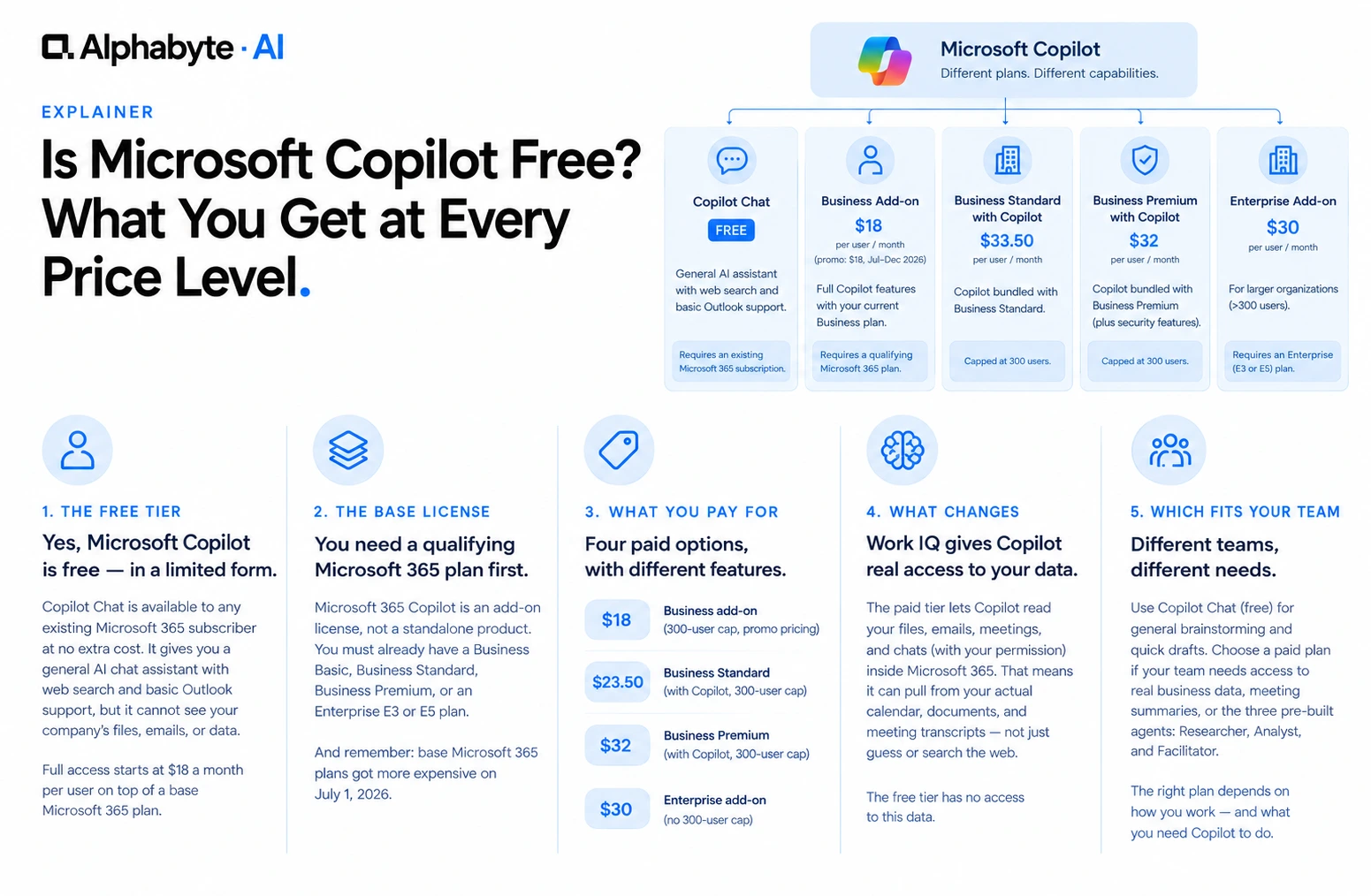
Is Microsoft Copilot Free? What You Get at Every Price Level
Microsoft Copilot has a free tier, but it is missing the one feature most businesses actually want. Here is what each price level actually includes, and what it requires underneath.
Read more →
What Is an MCP Server? A Plain-English Guide for Business Teams
MCP servers let AI tools like Copilot and Claude read your company's real data instead of guessing. Here is what that means, without the engineering jargon.
Read more →